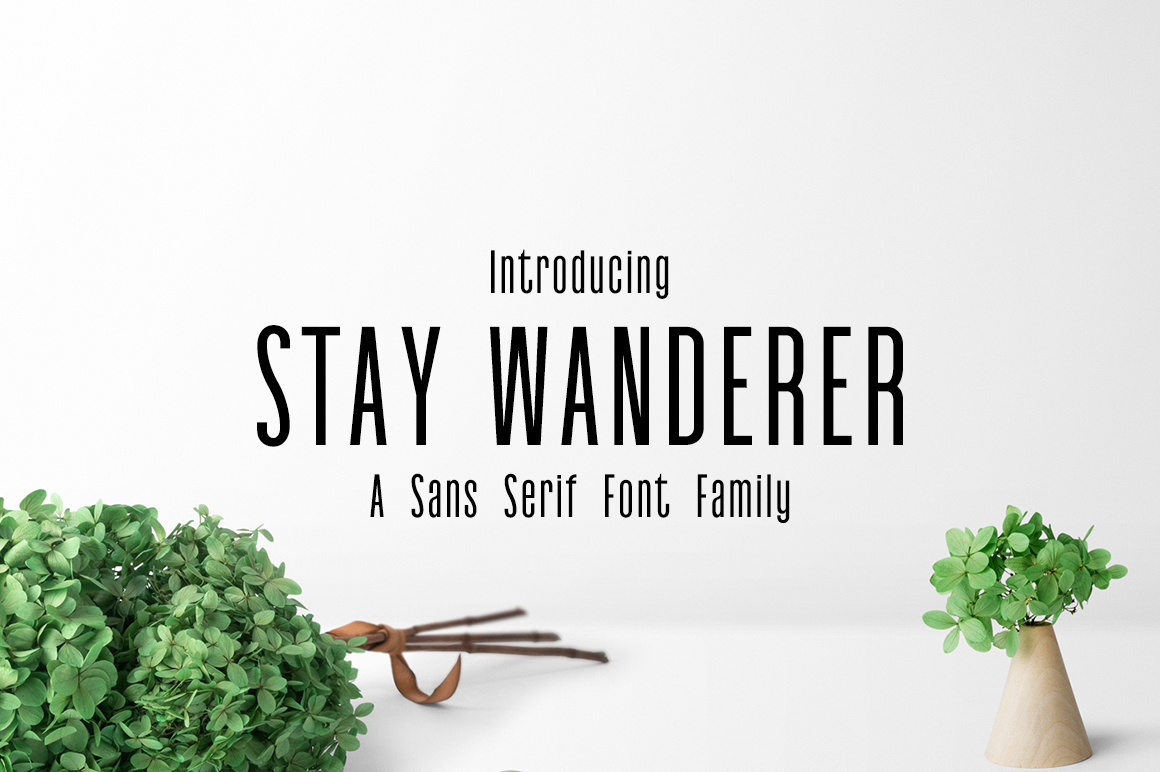
Stay Wanderer: Redefining the Balance Between Stability and Exploration in the Modern Work Era
The way professionals approach work, lifestyle, and location has shifted dramatically over the past decade. Remote work, freelance culture, and digital entrepreneurship have untethered millions from the traditional office environment. Yet, with this newfound freedom comes a persistent tension: how do you maintain stability while embracing exploration? This is where Stay Wanderer enters the conversation — not as a passing trend, but as a thoughtful response to a deeply felt need among modern professionals.
Stay Wanderer represents a philosophy and increasingly a practical framework for those who want to stay grounded while wandering. It is not about perpetual motion or rootlessness. Instead, it is about designing a life and career where stability and movement coexist intentionally. For professionals, creators, entrepreneurs, and freelancers who feel pulled between the desire for security and the call of new experiences, Stay Wanderer offers a compelling middle path.
What Is Stay Wanderer?
At its core, Stay Wanderer is a mindset and a set of practices that enable individuals to build a stable foundation — whether that is a home base, a recurring income stream, a community, or a set of routines — while maintaining the flexibility to travel, explore, and pivot as opportunities arise. It is the opposite of the "burn and churn" approach to nomadic life, where people exhaust themselves moving from place to place without roots. Instead, Stay Wanderer emphasizes intentional mobility paired with deliberate stability.
For marketers, the concept resonates because it mirrors the modern customer journey itself: people want familiarity but also discovery. For entrepreneurs, it reflects the balance between operational consistency and strategic innovation. For freelancers and creators, it speaks to the need for reliable systems that support creative exploration rather than hinder it.
Stay Wanderer is not a product in the traditional sense — it is a lens through which to evaluate tools, services, workflows, and lifestyle choices. It asks: Does this help me stay rooted while also enabling me to move forward?
Why Stay Wanderer Matters Now
The timing of Stay Wanderer's relevance is no coincidence. Several converging trends have made the stability-exploration tension more acute than ever.
The Rise of Location-Independent Work
Remote work is no longer a niche arrangement. According to recent data, a significant portion of the global workforce now operates remotely at least part of the time. This has unlocked geographic flexibility for millions. However, early enthusiasm for constant travel has given way to a more nuanced understanding: many professionals want a home base — a place where they can work effectively, maintain relationships, and recharge — while still having the option to work from other locations periodically.
Stay Wanderer addresses this directly by offering a framework for people who want both. It acknowledges that human beings thrive with a sense of belonging, but also with novelty and change. The digital nomad movement initially leaned heavily on the "wanderer" side. Stay Wanderer corrects the imbalance by bringing the "stay" back into the equation.
The Shift Toward Intentionality in Lifestyle Design
Professionals across industries are increasingly rejecting the hustle culture that dominated the last decade. Burnout is widely recognized as a systemic issue, not a personal failing. In response, people are seeking sustainable productivity — ways to work that allow for deep focus, meaningful rest, and genuine connection. Stay Wanderer fits naturally into this shift because it prioritizes quality over quantity in both work and travel experiences.
Rather than visiting ten cities in three months, the Stay Wanderer approach might involve spending several weeks in a single location, building a temporary routine, and engaging with the local community while maintaining core work responsibilities. This is not just a lifestyle preference; it is a strategy for long-term creativity and resilience.
Changing Expectations Around Work Environments
Employees and freelancers alike are becoming more discerning about where and how they work. A generic coworking space no longer suffices for everyone. People want environments that support their specific workflows — quiet zones for deep work, areas for collaboration, reliable infrastructure, and a sense of aesthetic and cultural inspiration. Stay Wanderer encourages professionals to think critically about their physical and digital environments, treating them as infrastructure for both stability and exploration.
Practical Applications of Stay Wanderer
Understanding the concept is one thing. Applying it requires deliberate choices across several dimensions of professional life.
Workflow Design
For a creator or marketer who travels frequently, maintaining consistent output can be challenging. Stay Wanderer advocates for asynchronous workflows that are not dependent on a single time zone or location. This means using project management tools, cloud storage, and communication platforms that allow for seamless transitions between locations. It also means building routines around deep work that travel and hold the same weight regardless of physical setting.
Practical example: A freelance content strategist might establish a "home office" in one city but spend two months per year working from a different region. By keeping core client processes standardized — using the same project management system, communication channels, and content calendar — the strategist can move without disrupting service delivery. The "stay" element is the system; the "wander" element is the location.
Community and Network Building
One of the greatest challenges for location-independent professionals is building and maintaining meaningful relationships. Stay Wanderer emphasizes intentional community engagement rather than superficial networking. This might involve joining local professional groups during extended stays, participating in co-living arrangements with like-minded individuals, or maintaining a virtual mastermind group that meets consistently regardless of where members are located.
The insight here is that stability does not require a single physical location. It can be found in consistent relationships, shared values, and recurring rituals — whether those happen in person or online. For entrepreneurs building remote teams, this principle applies directly to team culture and retention.
Revenue Stream Architecture
Financial stability is often the biggest concern for those who want to embrace mobility. Stay Wanderer encourages a diversified but manageable income structure. Rather than chasing passive income schemes that promise freedom but often deliver complexity, the focus is on building one or two reliable revenue streams that are portable, then supplementing with project-based work that aligns with personal interests and locations.
Practical observation: Many successful Stay Wanderer practitioners have a "base business" — such as consulting, coaching, or a digital product — that generates recurring revenue, and then use the flexibility this provides to take on exploratory projects that might lead to new opportunities. This approach reduces financial anxiety while keeping the door open for creative and professional growth.
The Broader Context: Stay Wanderer and the Future of Work
The conversation around Stay Wanderer is part of a larger evolution in how we think about work, identity, and place. The traditional career path — linear, geographically fixed, organizationally bound — is no longer the default. In its place, a more fluid model is emerging, one where professionals navigate multiple roles, locations, and identities over a lifetime.
Stay Wanderer provides a conceptual anchor in this fluid environment. It acknowledges that while flexibility is valuable, humans are not designed for perpetual flux. We need touchpoints of consistency — a reliable internet connection, a familiar coffee shop, a community of peers, a set of values — that ground us even as we explore.
For marketers and business leaders, this has implications for how products and services are positioned. The audience that resonates with Stay Wanderer is not looking for a life of extremes. They do not want to be tied to a desk 50 weeks a year, but they also do not want to live out of a backpack indefinitely. They want options, not obligations. Messaging that speaks to this desire for balanced autonomy will connect more deeply than either extreme.
Technology as an Enabler, Not a Driver
Technology plays a supporting role in the Stay Wanderer framework, but it does not define it. The tools that enable remote work, communication, and travel logistics are necessary but insufficient. What matters more is the intentional use of technology to support human priorities. Stay Wanderer encourages professionals to audit their tech stack regularly and ask: Does this tool increase my freedom, or does it create new forms of attachment and complexity?
For example, a project management tool that requires constant check-ins might undermine the very flexibility it is meant to enable. Similarly, a communication platform that blurs boundaries between work and rest can erode the stability that Stay Wanderer seeks to preserve. The principle of minimal viable infrastructure applies: use the fewest tools that reliably support your core workflows, and resist the temptation to add complexity.
Who Is Paying Attention to Stay Wanderer?
The concept is gaining traction among several distinct groups, each for their own reasons.
Entrepreneurs see it as a model for building businesses that do not require constant physical presence — offering both personal freedom and organizational resilience. Freelancers appreciate the emphasis on sustainable output and the validation of wanting both adventure and stability. Marketers are drawn to the narrative potential of the Stay Wanderer archetype, which resonates with audiences tired of the "anywhere, anytime" hustle narrative. Creators find in it a framework for maintaining creative practice while drawing inspiration from new environments. Professionals in traditional roles who are exploring a transition to more independent work see Stay Wanderer as a bridge — a way to test the waters without jumping into chaos.
The common thread is a desire for agency over time, location, and work style, coupled with a realistic understanding that freedom is not the absence of structure, but the presence of chosen structure.
Observations from the Field
Those who have embraced the Stay Wanderer approach often report a few consistent outcomes:
- Higher quality of work: With less time spent on logistics and transitions, more energy goes into creative and strategic thinking.
- Deeper relationships: Spending longer periods in fewer locations allows for genuine connections rather than superficial encounters.
- Greater resilience: The combination of stable systems and periodic new environments builds adaptability without sacrificing consistency.
- More intentional growth: Instead of drifting from opportunity to opportunity, growth is directed by personal values and professional goals.
These outcomes are not accidental. They result from a deliberate choice to prioritize meaning over motion and depth over breadth in both work and travel.
Conclusion: The Enduring Relevance of Stay Wanderer
Stay Wanderer is more than a personal productivity hack or a travel lifestyle label. It is a response to a fundamental question of our time: How can we live fully in a world that offers unprecedented freedom, without losing the grounding that makes a good life possible?
For professionals, creators, entrepreneurs, marketers, and enthusiasts, the message is clear. The future belongs not to those who move the fastest or accumulate the most experiences, but to those who can combine stability with exploration in a way that sustains both their work and their well-being. Stay Wanderer provides a path forward — one that honors both the need to stay and the desire to wander, not as opposites, but as complementary forces in a well-designed life.
As the boundaries between work and life continue to blur, and as the options for where and how we work multiply, the principles behind Stay Wanderer will only grow in relevance. The challenge is not to choose between staying and wandering. It is to do both, intentionally and well.