Descuadrado: Rethinking Structure in a World Obsessed with Perfect Alignment
For years, we have been told that straight lines, perfect grids, and flawless symmetry are the hallmarks of good design, clear thinking, and effective systems. From the way we arrange our desks to the way we structure our business plans, the square has been the default shape of order. But what happens when you deliberately step outside that rigid framework? This is where the concept of Descuadrado enters the conversation.
At its core, Descuadrado is not about chaos. It is about intentional deviation. It represents the decision to break from the expected pattern, to shift the angle, or to leave a deliberate gap in the structure. It is the opposite of forced uniformity. Whether you are a visual designer looking for a fresh composition, a business owner rethinking your workflow, or a professional trying to communicate a complex idea, understanding Descuadrado can offer a powerful new lens.
This article goes beyond a simple definition. We will explore what Descuadrado actually means in practical terms, where it adds value, and, just as importantly, when it might not be the right tool for the job.
What Descuadrado Really Means
The most direct translation of the Spanish word Descuadrado is out of square. In a literal sense, it describes something that is not perfectly aligned with the right angles of a grid. But when applied as a concept, it takes on a much deeper meaning.
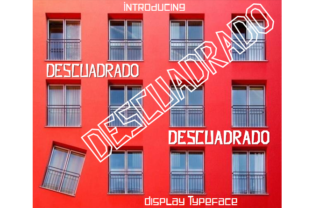
Think of it as the visual or structural equivalent of a thoughtful pause. In a perfectly square room, every corner meets at ninety degrees. It is predictable. It is safe. Now, imagine a room where one wall is slightly tilted. Immediately, your attention is drawn to that tilt. Your eye pauses. Your brain asks, "Why?" That moment of questioning is the essence of Descuadrado.
This concept is not about sloppiness or poor execution. It is about creating intentional friction within a system. It is a deliberate choice to step away from the expected norm in order to highlight something, create movement, or solve a problem that perfect alignment cannot address.
Key Characteristics of a Descuadrado Approach
- Intentional Asymmetry: The imbalance is calculated, not accidental. It serves a purpose.
- Dynamic Tension: It creates a sense of energy or movement within a static structure.
- Focal Disruption: It breaks the monotony to guide the viewer or user toward a specific point of interest.
- Contextual Awareness: It only works if the surrounding context is predominantly structured. A Descuadrado element needs a baseline of order to stand out.
It is crucial to understand that Descuadrado is not the same as being random. Randomness lacks intent. Descuadrado always has a reason behind the deviation.
Where Descuadrado Adds Real Value
The beauty of this concept is that it is not limited to one industry. It is a cross-disciplinary tool that can be applied wherever structure exists. Here are some of the most effective scenarios where adopting a Descuadrado mindset can make a significant difference.
Visual Communication and Graphic Design
This is the most intuitive application. In design, strict grids can lead to layouts that feel cold or sterile. By introducing a Descuadrado element—a tilted image, a block of text that breaks the column, or a color that sits outside the palette—you create hierarchy without relying solely on size or boldness. For example, consider a brand identity that uses a perfectly clean logotype on every asset, but the photography is always slightly off-kilter. That contrast becomes a signature. It signals that the brand is organized but not rigid, professional but approachable.
Business Strategy and Problem Solving
Many business models rely on standard operating procedures. These are necessary for efficiency, but they can also create blind spots. Applying a Descuadrado approach to strategy means deliberately questioning the assumption that the existing process is the best process. It might mean scheduling a meeting with no agenda, assigning a project to a team that has no experience in that area, or allocating budget to an initiative that does not directly tie to revenue. These "out of square" decisions can uncover innovative solutions that a purely logical, linear approach would miss.
User Interfaces and Digital Products
In UX design, consistency is king. But too much consistency can make an interface boring or hard to navigate because everything looks the same. Using Descuadrado in a digital product means breaking a pattern only when it matters. The classic example is a call-to-action button. If every button on the page is rounded and neutral-colored, one angular, brightly colored button will immediately stand out. That is Descuadrado in action. It leverages the existing structure to make a single element more powerful.
Creative Writing and Content Creation
Structure in writing is essential for clarity. However, a piece of content that follows the exact same sentence length, paragraph structure, and rhythm throughout can become monotonous. Introducing a Descuadrado element—a one-sentence paragraph, a sudden shift in tone, or a brief, unformatted aside—can re-engage a drifting reader. It mirrors the natural rhythms of conversation, where pauses and shifts in pace keep the listener attentive.
Who Benefits Most from a Descuadrado Mindset?
While the concept is broad, certain individuals and groups will find it particularly useful.
- Freelancers and Independent Creatives: Those who need to differentiate their work in a saturated market. A Descuadrado style can become a recognizable signature.
- Product Managers: Professionals tasked with balancing user expectations with innovation. They can use Descuadrado thinking to introduce features that feel fresh without confusing the user.
- Educators and Facilitators: Teachers who need to break through the passive learning patterns of a classroom. A Descuadrado lesson plan—one that starts with a conclusion or uses an unusual format—can spark curiosity.
- Small Business Owners: Entrepreneurs who compete against larger, more rigid competitors. Being able to pivot quickly or adopt a non-standard process can be a major competitive advantage.
Practical Considerations and Limitations
Descuadrado is a high-impact tool, but it is not a universal solution. Understanding its limitations is just as important as understanding its strengths.
When Descuadrado Works Against You
The first rule of using Descuadrado is that it requires a baseline of order. If your entire project, design, or strategy is already chaotic, adding more deviation will only compound the confusion. The concept relies on contrast. Without clear structure, there is no contrast. It simply looks broken.
Furthermore, this approach can be risky in contexts that demand high levels of trust and clarity. For instance, a legal document should never be Descuadrado. Financial reporting, medical instructions, and safety guidelines all require absolute precision and predictability. In these contexts, deviation is a liability, not a feature.
Practical Expectations for Implementation
If you decide to apply a Descuadrado approach to your work, start small. Identify one element of a system that you can deliberately shift. For example, instead of redesigning your entire website layout, start by moving one key element out of alignment with the rest. Test it. See how users react. The goal is not to be different for the sake of being different; it is to be different for the sake of being effective.
There is also a learning curve. Audiences who are accustomed to perfectly structured content may initially perceive a Descuadrado element as a mistake. This is where intentionality becomes critical. If the deviation is clearly purposeful, and it clearly serves the content or function, the audience will eventually perceive it as a sophisticated choice rather than an error.
Real-World Scenarios: Descuadrado in Action
To ground this concept in reality, consider these three scenarios where Descuadrado transforms a standard situation.
Scenario One: The Retail Store Layout. A standard grocery store follows a predictable grid: aisles, shelves, and end caps. One store decides to rotate a single display stand in the middle of an aisle by fifteen degrees. That stand now becomes a natural stop point. Shoppers slow down. They browse it more carefully. The sales of that specific product increase. That is Descuadrado in physical space.
Scenario Two: The Corporate Newsletter. A company sends out a weekly newsletter that always follows the same format: header, three articles, footer. One week, they drop all formatting. They send a plain-text email with a single story and no images. The open rate and reply rate spike. The departure from the norm signals urgency or authenticity. That is Descuadrado in communication.
Scenario Three: The Music Composition. A song is built around a steady, predictable beat. In the bridge, the drummer deliberately skips a beat. The silence creates tension. The listener leans in. The return to the beat feels like a release. That is Descuadrado in rhythm.
Evaluating Suitability for Your Project
Before you commit to a Descuadrado approach, ask yourself these three questions:
- Is there a strong existing structure? If yes, you have the contrast needed to make the deviation work. If no, focus on creating order first.
- Does the deviation serve a specific purpose? Can you articulate why you are breaking the pattern? If you cannot, the audience will not understand it either.
- Is the audience ready for it? Conservative or strictly professional audiences may resist unexpected changes. This does not mean you should avoid Descuadrado, but you may need to introduce it gradually or in a subtle way.
Final Thoughts on Working with Descuadrado
Descuadrado is not a trend or a style you can copy. It is a thinking tool—a way of approaching problems and communication with a healthy skepticism toward rigid systems. It reminds us that perfection does not always mean perfect alignment. Sometimes, the most compelling, memorable, and effective solution is the one that stands just slightly out of place.
By learning to recognize when a situation calls for order and when it calls for a deliberate break from that order, you develop a more flexible, responsive approach to your work. You move from being someone who follows the grid to someone who understands when the grid needs to be broken.
If you take one thing from this exploration, let it be this: Descuadrado is not about being wrong. It is about being intentionally different. And in a world that often rewards conformity, that kind of intentional difference can be your greatest asset.